
An acoustic wall treatment is one of the fastest ways to improve the sound quality in a room. Acoustical wall panels and panel systems are designed for absorption, not isolation. They are used to lower reverberation, improve speech clarity, and along with properly built wall assemblies, support privacy in practical ways. Acoustical panels alone do not turn a standard partition into a soundproof barrier.
If the problem is echo, adding absorptive surfaces will help greatly, and oftentimes solve the problem. If the issue is conversational privacy, the answer is a layered approach that generally involves construction. Understanding wall treatment vs soundproofing will help to keep your project grounded.
The good news is that most everyday acoustic problems – especially in offices, classrooms, healthcare, and hospitality – are not isolation problems. They are almost always sound quality problems that can be solved quickly with the right acoustic materials.
Quick Assessment – What Problem Are You Solving?
Before selecting products, step back and define the problem. Projects sometimes go wrong here – not because of the materials, but because the problem is misidentified. Taking a minute to diagnose the room correctly is an important step that ensures you choose the right product to meet the needs of the space based on the exact type of issue you are experiencing.
Most rooms fall into one of these three categories:
- Excess echo
Hard surfaces cause sound waves to bounce around within a room, increasing perceived loudness and reducing clarity. - Conversational privacy
People can hear and understand sensitive conversations from adjacent spaces. - Neighbors or adjacent-room noise
Sound is traveling through walls, ceiling, ductwork, doors, or windows.
STC vs NRC explained in plain terms: NRC (Noise Reduction Coefficient) measures how much sound a material absorbs. STC (Sound Transmission Class) is a measurement of how much sound is blocked by a structure (a wall assembly, a door, a window, or even a floor/ceiling assembly).
NRC rated panels improve reverberation control and acoustical clarity. They should not be used to improve how much sound is blocked by a wall or ceiling. If isolation is the goal, you are in construction territory as nearly all products that are used to block or reduce sound are part of the wall or ceiling assembly.
A simple way to frame it:
- Absorption changes how the room sounds
- Isolation changes what gets in or out
Most successful projects address both – but start with the problem you are actually experiencing.
Material LogIQ Wall Treatments
All of the following solutions are surface-applied and designed for direct attachment using adhesives or mechanical fastening. In most cases, adhesive panel mounting is permanent – removal will damage paint or substrate. That should be assumed upfront when planning.
PET Felt Wall Panels
When the goal is to reduce echo in office environments, classrooms, or hospitality spaces, PET felt is usually the most efficient starting point.
Material LogIQ’s PET felt acoustic panels are available in ½”, 1”, and 2” thicknesses, with strong absorption performance across mid-to-high frequencies. They are GREENGUARD Gold Certified, Class A fire rated, and made with high recycled content.
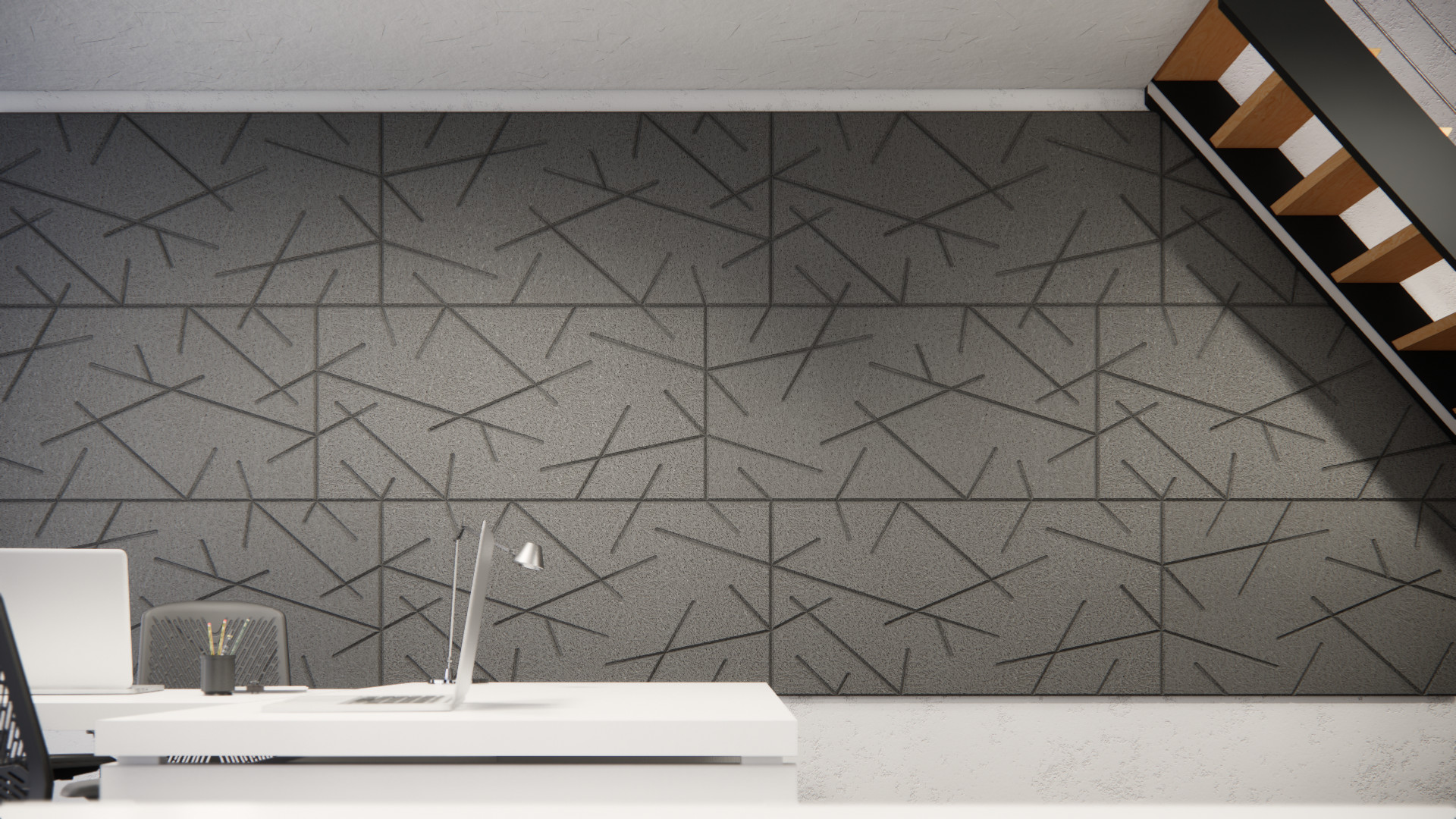
This is why PET felt acoustic panels are so widely used: they balance performance, cost, and design flexibility. They come in a broad color range and can even incorporate printed textures, allowing them to function as both finish and acoustic control.
The GRILLA system builds on this by mounting PET felt panels on a metal carrier, creating cleaner alignment and more controlled layouts on larger wall applications.
In practice, PET felt becomes the default starting point because it solves the most common problems without overcomplicating the install. It performs consistently, scales easily across wall areas, and integrates well with other acoustic materials when layering is required.
Use PET felt when:
- Echo and reverberation are the main issue
- Speech clarity needs improvement
- A softer, more adaptable visual finish is desired
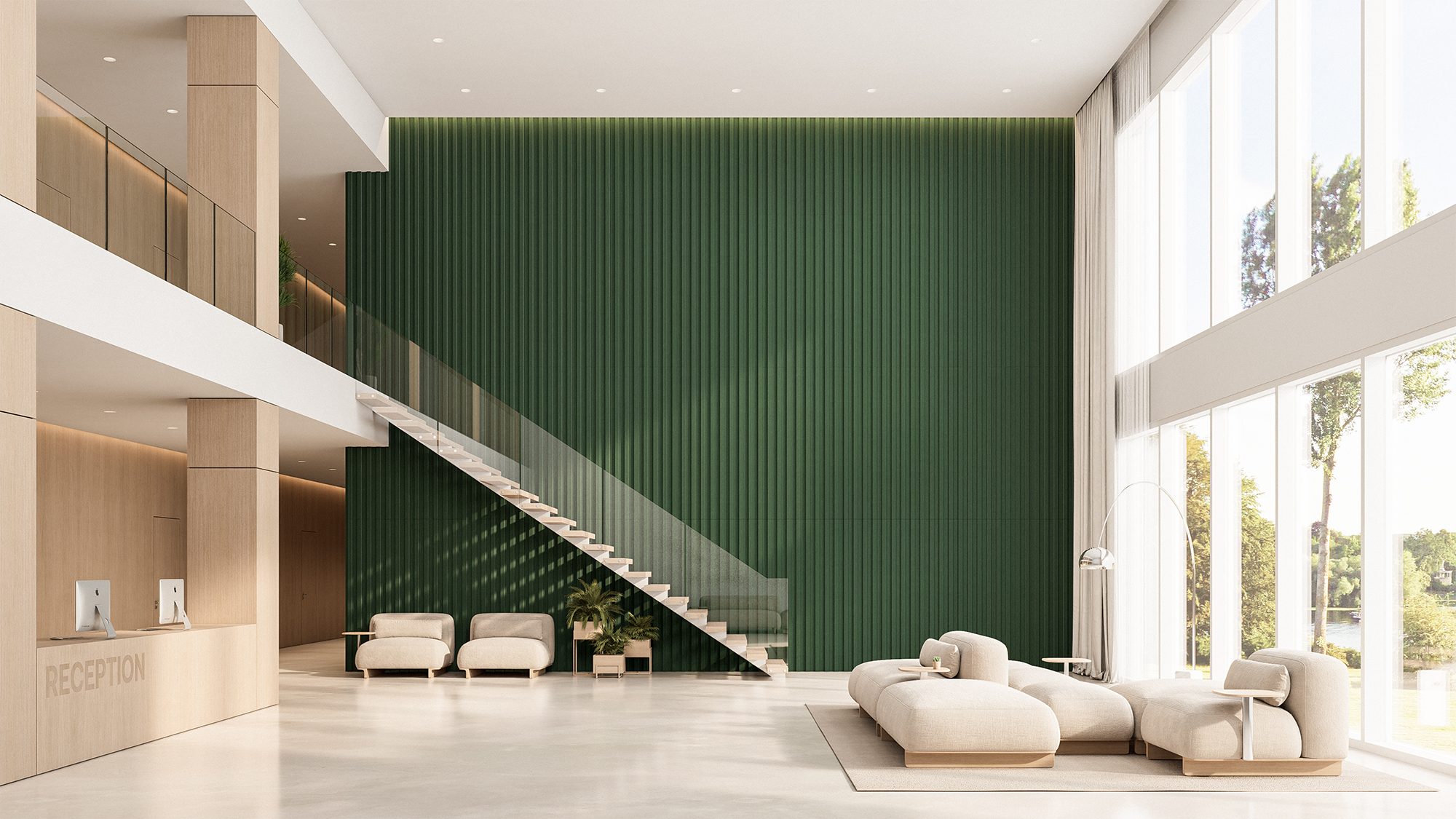
Microperforated Metal Panels
Microperforated metal panels solve a different problem: durability without sacrificing absorption.
Material LogIQ’s Silk Metal system uses precisely angled micro-perforations – to allow metal surfaces to absorb sound while maintaining a clean, architectural appearance. These systems can achieve strong NRC performance while remaining highly durable and easy to clean.
This makes microperforated metal panels ideal for:
- Healthcare environments
- Corridors and public areas
- High-traffic commercial spaces
They challenge the assumption that metal must be reflective. When properly engineered, they provide balanced absorption with a much more resilient finish than soft panels.
Wood Wool Acoustic Panels
When the design calls for texture and warmth, wood wool acoustic panels offer a strong middle ground between performance and visual presence.
Material LogIQ’s engraved wood wool panels introduce a tactile surface that reads as intentional architecture, not just applied treatment. They provide broad-band absorption and work well in spaces where acoustic control needs to feel integrated into the design.
Use cases include:
- Classrooms and lecture spaces
- Amenity areas
- Feature walls in shared environments
Wood wool performs well when you want the acoustic solution to be visible but still refined.

Acoustic Slat Walls
An acoustic slat wall combines absorption and diffusion in a single system. The wood slats shape reflection and add visual rhythm, while the backing – typically PET felt – handles absorption.
Material LogIQ’s SLATTA system fits perfectly well in:
- Hospitality spaces
- Workplace environments
- Residential-style commercial interiors
This is a strong choice when a room feels both acoustically harsh and visually flat. The slats soften reflection without over-dampening the space.
Mounting Without Mess – Installation Paths That Preserve Walls
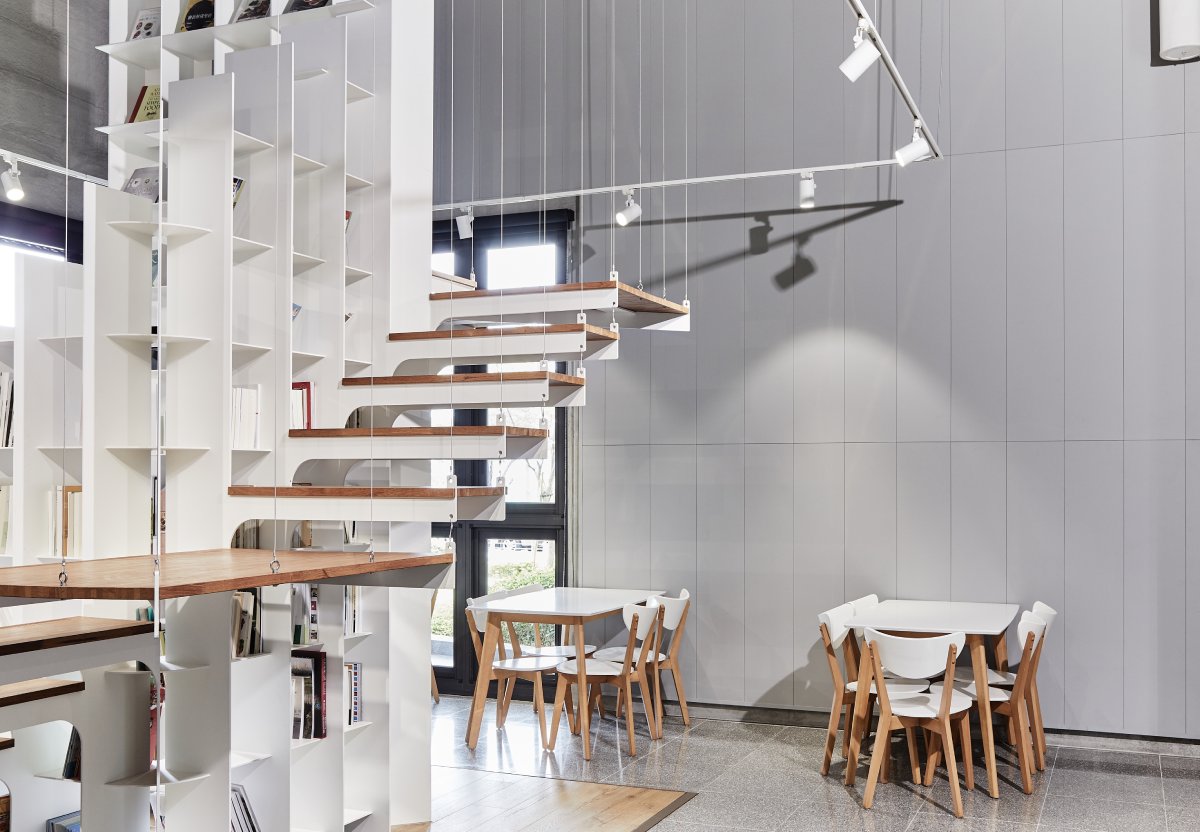
There are only a few practical ways to install wall treatments without unnecessary disruption. This is where expectations around flexibility need to be clear. Many clients ask about removable acoustic panels, but most high-performance wall systems are not designed for frequent relocation. If future changes are likely, mechanical attachment methods are more practical when compared to permanent adhesive installs.
Adhesive mounting is common for lighter panels and clean installations. It minimizes visible hardware and speeds up install time. However, it is permanent. Removal will damage paint and may affect the substrate.
Mechanical attachment, including acoustic panel cleats and Z-clips, is better for heavier systems or when future access is needed. These methods reduce the number of penetrations while maintaining a secure installation.
The key decision is not just how to mount the panel – but how long it needs to stay. A permanent install and a flexible install require different strategies from the start.
Material LogIQ’s fabrication capabilities help here by aligning panel design, hardware, and layout early in the process – reducing field adjustments and preserving the finished wall.
Fast No-Renovation Wins Most Projects Overlook
Even the best sound absorbing wall panels will underperform if the rest of the room is working against them. While Material LogIQ focuses on wall-based acoustic materials, there are a few adjacent upgrades that consistently improve results and are worth addressing alongside panel installation.
Seal the weak points
Door sweeps and seals are one of the most overlooked upgrades. Gaps at the perimeter allow sound to pass freely, undermining privacy and overall performance. Door sweeps and seals don’t create total isolation, but they reduce leakage significantly.
Address glass surfaces
Glass reflects sound and allows exterior noise into a room from outside. Window inserts can help reduce outside noise and improve acoustic balance near glazing. In some cases, acoustic curtains can also reduce flutter echo.
Add soft surfaces strategically
Rugs, bookshelves, and textiles help break up reflections. These are not substitutes for acoustic panels, but they reinforce overall noise reduction.
Use masking when needed
When privacy is the goal, sound masking can be more effective than adding more absorption alone. It reduces speech intelligibility across a space – often the real issue in offices and clinics.
These are small moves, but they often determine whether a project feels successful or incomplete.
How Many & Where to Place Panels on Ceilings or Walls
Placement matters to the eyes – not necessarily to the ears.
Because sound travels through and around a room at 767.269148 miles per hour (in dry air at 68 degrees), the exact location of an absorptive surface generally does not impact overall performance or drastically change the way most rooms sound. Most underperforming installs have nothing to do with installing the wrong product or installing too little based on the size and surfaces in a room.
Most often, it is recommended to distribute panels across multiple surfaces. A single treated wall can help, but it often makes the room look and feel unbalanced. Most projects utilize absorption on multiple walls or spread acoustical panels evenly across the ceiling.
General coverage guidelines:
- Small meeting rooms: 15-25% wall coverage
- Classrooms: 20-30%
- Open or highly reflective spaces: may require more
The goal is not full coverage – it’s effective coverage.
This is where selecting the right mix of acoustic materials matters. Thicker panels improve low-frequency performance, while thinner panels handle mid and high frequencies efficiently. A combination often produces the best results.

Design-First Options (Because Walls Still Need to Look Great)
An acoustic solution should support the design, not compete with it.
PET felt offers the widest range of color and pattern flexibility. It can be subtle or expressive, depending on layout and finish. Printed textures can even replicate wood tones without changing performance.
Microperforated metal delivers a clean, modern aesthetic that integrates well with contemporary architecture.
Wood wool introduces texture and depth, making it ideal for feature walls.
Fabric-wrapped panels remain a strong option when a softer, more traditional finish is preferred, especially in conference and hospitality settings.
Material LogIQ’s custom fabrication capabilities allow these systems to move beyond standard panel layouts into more integrated design solutions.
Case-Style Mini Scenarios
Open Office with Echo
Echo and speech overlap are the main issues. PET felt wall panels at key reflection points reduce overall noise, while door sweeps and seals improve blocking performance. Optional masking adds another layer of privacy.
Clinic Exam Rooms
Durability and cleanliness are priorities. Microperforated panels provide absorption without compromising maintenance. Window inserts help manage exterior noise where needed.
University Classroom
A wood wool feature wall provides broad absorption, while PET felt panels add additional control and flexibility. The result is improved speech intelligibility without over-treating the space.
Each of these scenarios works because it relies on surface-applied solutions – no demolition required.
Budget & Timeline: What to Expect
Cost is driven by:
- Material type
- Panel thickness
- Finish and customization
- Mounting method
Standard sizes and finishes move faster. Custom shapes, engraved patterns, and complex layouts increase lead time.
A practical approach is to start with one space, validate the design and performance, and then expand. This keeps the scope aligned with actual needs rather than assumptions.
FAQs
Will this stop bass sounds from traveling?
No. Low-frequency sound requires mass and structural changes. Panels reduce echo and improve clarity, which often makes noise feel less intrusive.
Can I remove panels later?
Mechanical systems allow easier removal. Adhesive-mounted panels are permanent and will damage paint.
Do I need ceiling treatment too?
Often, yes. Start with walls, then evaluate whether additional absorption is needed overhead.
What else helps with privacy?
Sealing gaps, using masking, and addressing flanking noise control paths all improve results without major construction.
What certifications matter?
Look for Class A fire ratings (ASTM E84) for code compliance in commercial spaces and low-VOC certifications like GREENGUARD Gold for indoor air quality. For performance, NRC ratings matter most for absorption.
Ready for a Quieter Space?
A well-planned acoustic wall treatment can be achieved by focusing on absorption, placement, and practical upgrades like sealing gaps and installing window inserts. This will provide meaningful improvements in clarity, comfort, and privacy without renovation.
Material LogIQ offers PET felt acoustic panels, microperforated metal panels, wood wool acoustic panels, and acoustic slat wall systems designed for real-world installation conditions. If you need a fast, effective path to better reverberation control and reliable noise reduction, the right acoustic wall treatment can deliver it without opening up your walls.