
Ceiling Clouds
Define spaces and control sound with sculptural acoustic ceiling clouds that suspend gracefully overhead via cable, threaded, or unistrut. Delivering targeted noise absorption with artistic flair, these clouds prove great acoustics should make you look up. Choose from diverse forms and high-performance materials like PET felt or microperforated aluminum to create stunning focal points that enhance ambiance and clarity.
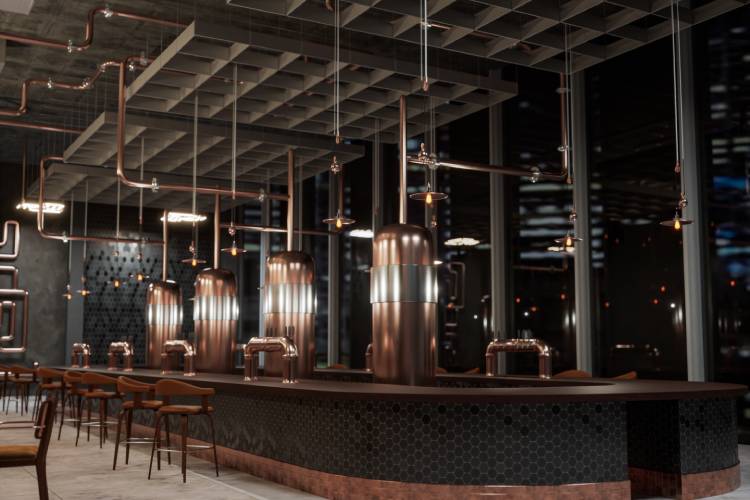
Ceiling Panels


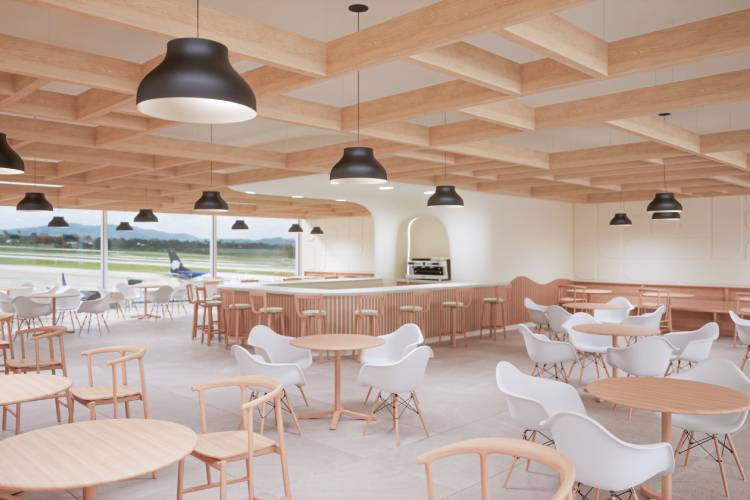
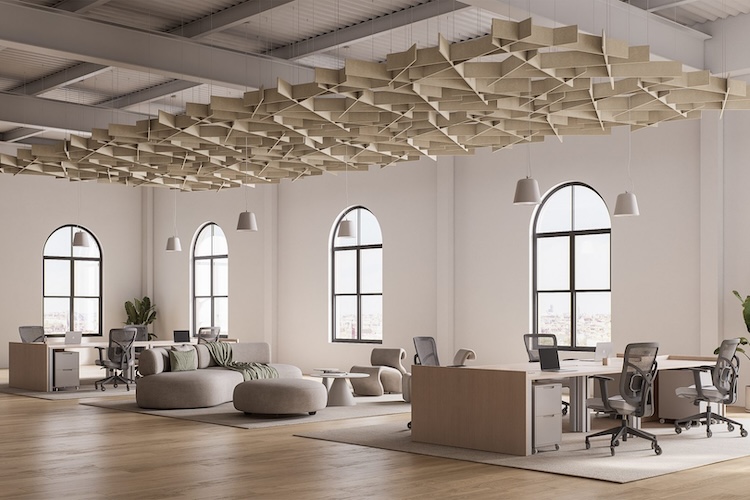
Choosing the Right Ceiling Cloud System
Acoustic Target
Ceiling clouds are designed to provide concentrated acoustic absorption directly over occupied zones. Unlike vertical baffles, which treat the general volume of a room, horizontal clouds focus on absorbing the early reflections that bounce between the floor and the deck, a critical factor for speech intelligibility. This makes them the ideal solution for 'spot treating' conference tables or workstations. Material LogIQ clouds allow you to enhance clarity and reduce reverberation without sacrificing the aesthetic of an open plenum.
Ceiling Volume, Height & Coverage Strategy
Ceiling clouds are most effective in spaces with moderate to high ceilings where targeted acoustic control is needed without fully treating the entire ceiling plane. Performance improves when clouds are suspended with an air gap above the panel, allowing absorption on both the face and back side. Clouds are often deployed strategically—over conference tables, classrooms, collaboration zones, reception areas, or dining spaces—to deliver focused acoustic control where it matters most. Larger cloud groupings or tighter layouts increase absorption, while selective placement helps balance performance and aesthetics.
Design Integration
Ceiling clouds function as both acoustic elements and architectural features. Shape, scale, orientation, color, and elevation can reinforce spatial zoning, visual hierarchy, or brand expression. Material LogIQ ceiling cloud systems are available in PET felt and micro-perforated aluminum, allowing designers to coordinate acoustics with lighting layouts, ceiling grids, exposed structure, and mechanical systems. Well-designed cloud layouts improve acoustic comfort while contributing to a cohesive and intentional ceiling composition.
Environment & Application Considerations
Ceiling clouds are commonly specified for conference rooms, classrooms, libraries, hospitality spaces, corporate offices, and collaboration areas, particularly where a full acoustic ceiling is not desired. In commercial and institutional environments, clouds must meet fire performance requirements and integrate cleanly with lighting, sprinklers, and HVAC systems. Because clouds are suspended overhead, ceiling-specific engineering and coordination are essential. Not all wall panel constructions or mounting methods are suitable for cloud applications.
Sustainability & Material Selection
Ceiling clouds represent a meaningful surface area within the space, making material selection an important sustainability consideration. Material LogIQ offers cloud systems made with recycled content, low-VOC materials, and third-party certifications. PET felt ceiling clouds, in particular, support sustainability and wellness goals while delivering high acoustic absorption efficiency.
Suspension Methods
Ceiling cloud systems rely on engineered suspension methods, including cable systems, threaded rod, unistrut, or custom framing, depending on cloud size, weight, and ceiling conditions. Layout must account for load calculations, seismic requirements where applicable, plenum access, and coordination with lighting, fire protection, and mechanical systems. Material LogIQ provides technical guidance, shop drawings, and CAD/Revit assets to ensure ceiling clouds integrate safely and seamlessly into the ceiling infrastructure.
Frequently Asked Questions
When should I use acoustic baffles versus ceiling clouds?
Acoustic baffles are vertically oriented elements that absorb sound throughout the room volume. They are ideal for tall, open, or exposed ceilings and plenums where sound energy accumulates above the occupied zone and requires volumetric absorption rather than plane-based treatment.
Ceiling clouds are horizontal panels or assemblies that provide targeted sound absorption at a specific elevation. They are best suited for spaces with moderate ceiling heights where acoustic control is needed directly above occupied areas such as conference rooms, classrooms, collaboration zones, or dining areas.
What materials are available for ceiling cloud systems?
Material LogIQ offers acoustic cloud systems in two engineered materials:
Each material is engineered for overhead suspension and available in a range of sizes, finishes, and performance levels. Material selection is guided by acoustic targets, visual goals, durability requirements, and code compliance.
How high should ceiling clouds be suspended?
Can clouds be customized in size, spacing, or finish?
Can ceiling clouds be used with exposed ceilings?
Yes. Ceiling clouds are well suited for exposed or open ceiling designs where a full acoustic ceiling is not desired. Because clouds are localized and planar, they can be placed strategically without obscuring structure, ductwork, or mechanical systems.
In exposed-ceiling environments, ceiling clouds provide targeted acoustic control while preserving the openness and visual character of the space. Proper coordination ensures clouds integrate cleanly with lighting, sprinklers, and HVAC elements without creating visual clutter or access issues.
Are ceiling cloud systems fire-rated and suitable for commercial interiors?
Yes. Material LogIQ ceiling cloud systems in both PET felt and aluminum (Silk Metal) are Class A fire-rated per ASTM E84 and are suitable for commercial and public environments. Always review the specific product datasheet to confirm fire performance and code requirements for your application.
How do clouds interfere with HVAC airflow and return air paths?
For sound isolation or blocking noise, do ceiling clouds help?
No. Ceiling clouds are absorptive elements, not sound-isolating barriers. They reduce reverberation and improve speech clarity within a space, but they do not block sound transmission between rooms or prevent sound from traveling through ceilings or walls.
Sound isolation requires separate construction strategies such as full-height partitions, sealed assemblies, or mass-based systems.
What maintenance is required for acoustic clouds?
Maintenance varies by material:
- PET felt clouds: Periodic dusting or gentle vacuuming
- Metal clouds: Wipe with a soft cloth and mild detergent; avoid abrasive cleaners
Always follow product-specific maintenance guidelines included with the specification.
Are cloud systems sustainable?
Yes. Sustainability is a key consideration in Material LogIQ ceiling cloud systems. PET felt clouds contain up to 60% post-consumer recycled content and are GREENGUARD Gold certified. Many systems support low-VOC requirements and can contribute toward LEED and other green building documentation.