
Acoustic panels can play an important role in the comfort, appearance, and functionality of commercial interiors. But choosing the right products is only part of the specification process. Architects and designers also need confidence that the manufacturer can provide the materials, performance data, technical resources, and project support required to bring their designs to life.
Selecting an acoustic panels manufacturer means looking beyond the product catalog to understand what the company can deliver throughout a project. From standard wall and ceiling treatments to custom architectural installations, the right manufacturing partner can help make the design process more efficient and the finished result more predictable.
Key Takeaways
- Start with the project’s acoustic, architectural, and installation requirements before evaluating manufacturers.
- Look for reliable acoustic and fire testing, material information, and technical documentation.
- Consider custom acoustic panel fabrication capabilities when standard products cannot accommodate the design.
- Choose a manufacturer that can support specification, coordination, and installation with drawings, samples, and technical resources.
What Should You Look for in an Acoustic Panels Manufacturer?
Commercial acoustic panels are part of a larger architectural system, and their successful integration depends on more than appearance and sound absorption. The manufacturer may need to supply mounting details, test reports, finish samples, fabrication drawings, and other resources that help the design team move from specification to installation.
These capabilities become especially important on larger projects, where acoustic treatments must work alongside lighting, mechanical systems, architectural finishes, and other building elements. Unlike acoustic panel suppliers that primarily distribute finished products, manufacturers with broader material and fabrication capabilities may offer more flexibility as the design develops.
The goal is to find a manufacturer whose products and capabilities align with the project, rather than adapting the design around the limitations of a particular panel.
Start With the Requirements of the Project
Before comparing acoustic panel manufacturers, establish what the space needs to accomplish. A treatment suitable for a conference room may not be appropriate for a large lobby, auditorium, or open commercial interior, even when the products have similar absorption ratings.
Several considerations help narrow the field:
- Acoustic performance: Identify the room’s sound absorption needs and any specific performance targets.
- Application and geometry: Determine whether the treatment belongs on walls, ceilings, or suspended assemblies, accounting for room dimensions and ceiling height.
- Architectural appearance: Consider the intended visual effect, including material, color, texture, pattern, and finish.
- Durability and maintenance: Account for the expected level of contact, cleaning requirements, and long-term upkeep.
- Building coordination: Identify potential conflicts with lighting, HVAC components, sprinklers, and other architectural systems.
- Project requirements: Establish applicable fire, environmental, and sustainability criteria, along with any unusual dimensions or fabrication needs.
These decisions provide a framework for evaluating both standard acoustic panel systems and custom solutions. They also help manufacturers identify appropriate products and determine whether modifications will be necessary.

Check Acoustic Testing and Performance Data
An attractive panel still needs to deliver the acoustic performance the space requires. Manufacturers should be able to provide reliable test data for the products and configurations being considered.
Noise Reduction Coefficient (NRC) is a common starting point. It provides a single-number indication of a material’s sound absorption across a defined range of frequencies, but it doesn’t tell the whole story.
Panel thickness, backing materials, mounting methods, and air gaps can all affect acoustic performance. A product tested with an air space behind it may perform differently when installed directly against a solid surface.
When comparing products, look beyond the published NRC rating and review the tested assembly. The closer the test conditions are to the proposed acoustic panel installation, the more useful the results will be when making a selection.
Review the Technical Documentation
Reliable technical documentation makes it easier to evaluate products, prepare specifications, and coordinate the proposed system with the rest of the building design.
A capable acoustic panel manufacturer should be able to provide relevant resources such as:
- Product data sheets and CSI specifications
- Acoustic and fire test reports
- Standard construction and mounting details
- Installation instructions
- CAD drawings and BIM resources
- Material composition and environmental documentation
The availability and completeness of these resources can be as important as the products themselves. Missing information may lead to additional clarification requests, specification revisions, or delays when the project reaches construction.
Manufacturers that maintain accessible technical libraries give architects and specifiers a more reliable starting point for product evaluation. Material LogIQ, for example, provides specifications, installation documents, test reports, and CAD/BIM resources across its architectural systems.

Look at the Manufacturer’s Material Range
A manufacturer with experience across several acoustic materials gives designers more options for meeting performance and aesthetic requirements. This flexibility is particularly useful when a project includes different spaces or calls for a consistent design language across walls and ceilings.
Material LogIQ offers four primary material families, each with distinct architectural possibilities:
| Material | Architectural Advantages |
| PET Felt | Lightweight, versatile, and available in a wide range of colors and configurations |
| Wood | Natural warmth, architectural character, and varied finishes |
| Wood Wool | Distinctive texture with sound absorption and customizable finishes |
| Silk Metal | Durable microperforated aluminum with a refined metal appearance and acoustic capabilities |
A broader selection of architectural acoustic materials also gives the manufacturer more opportunities to recommend suitable alternatives when a particular finish, configuration, or material cannot meet the project’s requirements.
Standard Products vs. Custom Acoustic Panels
Standard acoustic panel systems are often the most practical choice when their dimensions, finishes, and performance already align with the design. They can simplify specification and provide a more predictable path to installation.
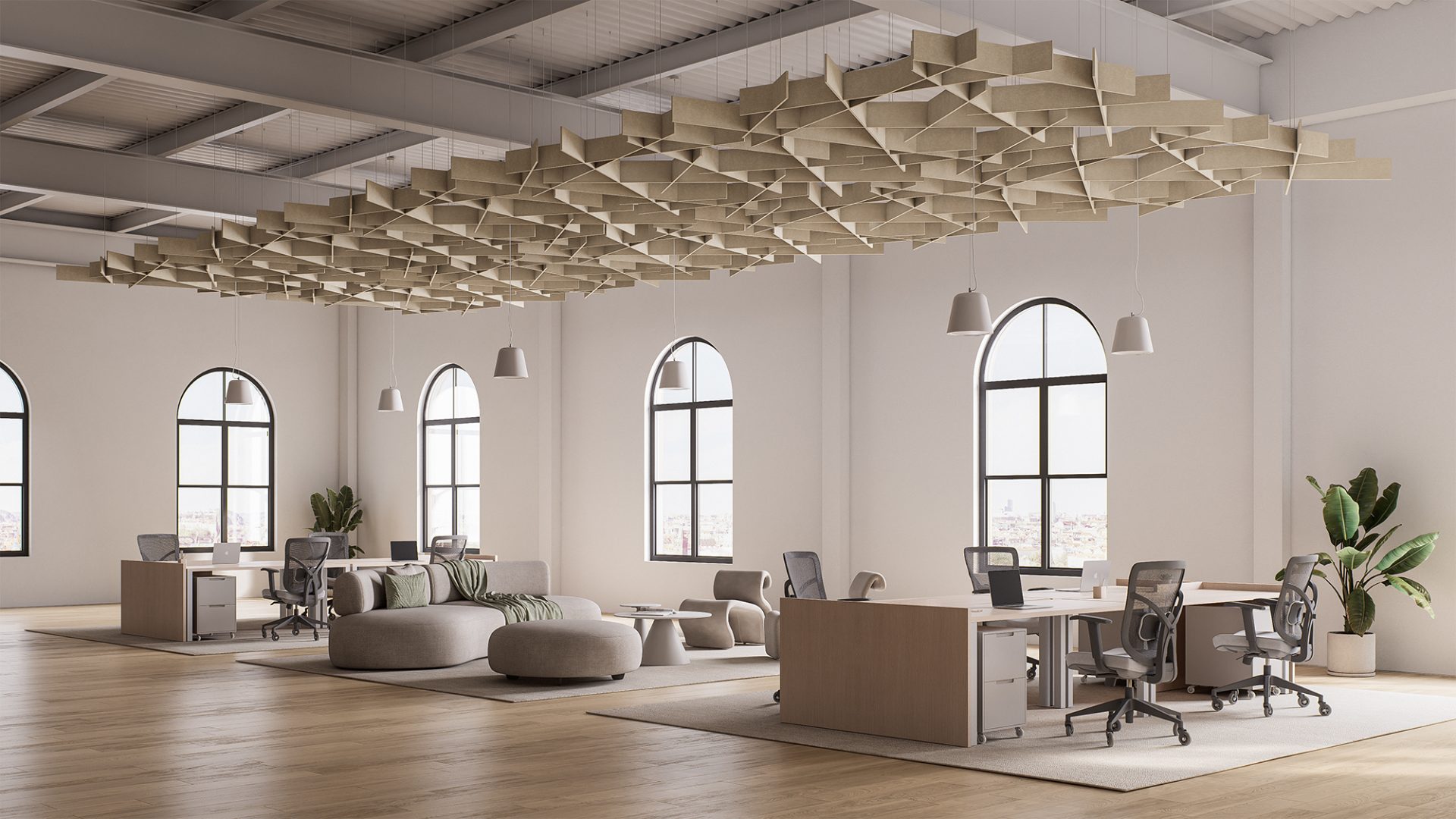
However, custom acoustic panels are often needed when a project requires unusual dimensions, distinctive patterns, curved surfaces, or specialized finishes. Large feature walls may call for custom acoustic wall panels, while statement ceilings can require coordinated panel layouts that standard products cannot accommodate.
Before selecting a custom acoustic panel manufacturer, consider whether its fabrication capabilities can support the design at the required scale. Precise cutting, repeatable patterns, and consistent finishes are particularly important when individual panels must align across large architectural surfaces.
Material LogIQ supports this type of collaboration through our Materialize process, which brings designers and manufacturing specialists together to develop project-specific solutions. The process moves from concept exploration and material selection through renderings, prototypes, technical drawings, and fabrication.
Our manufacturing capabilities include 5-axis CNC equipment and hydraulic die presses, supporting complex shapes and repeatable production across different materials. This allows designers to explore custom architectural panels while working with a team that understands how those designs will be manufactured.
Look for BIM, CAD, and Drawing Support
Accurate drawings and digital design resources help architects incorporate acoustic systems into their projects before construction begins. These tools help architects coordinate acoustic panel design with surrounding building elements and installation requirements.
Depending on the system, useful resources may include Revit families, DWG files, 3D models, standard mounting details, and project-specific shop drawings.
Material LogIQ’s technical resource library offers several digital formats across our product lines, including DWG, RFA, SKP, OBJ, STP, and 3DM files. The custom design process also supports the development of drawings and technical details for specialized installations.
These resources help connect architectural intent with the dimensions, assemblies, and fabrication requirements of the finished system.
Consider Fire, Material, and Indoor Environmental Requirements
Commercial acoustic materials must meet the requirements of their intended application. Before specifying a product, confirm that the manufacturer can provide documentation supporting its use in the proposed space.
Fire testing is particularly important for wall and ceiling treatments. ASTM E84, for example, evaluates surface-burning characteristics, including flame spread and smoke development. Results should be reviewed for the specific material or assembly being considered rather than assuming that all products within a manufacturer’s catalog are fire-rated acoustic panels.
Environmental considerations may also influence material selection. Depending on project requirements, architects may need information about VOC emissions, material composition, recycled content, or contributions toward sustainability goals such as LEED certification.
A manufacturer should be able to identify which documentation applies to each product and help the design team obtain the information needed for specification.
Consider Installation Before the Product Is Specified
Even a well-designed acoustic system can create difficulties if its installation requirements aren’t considered early.
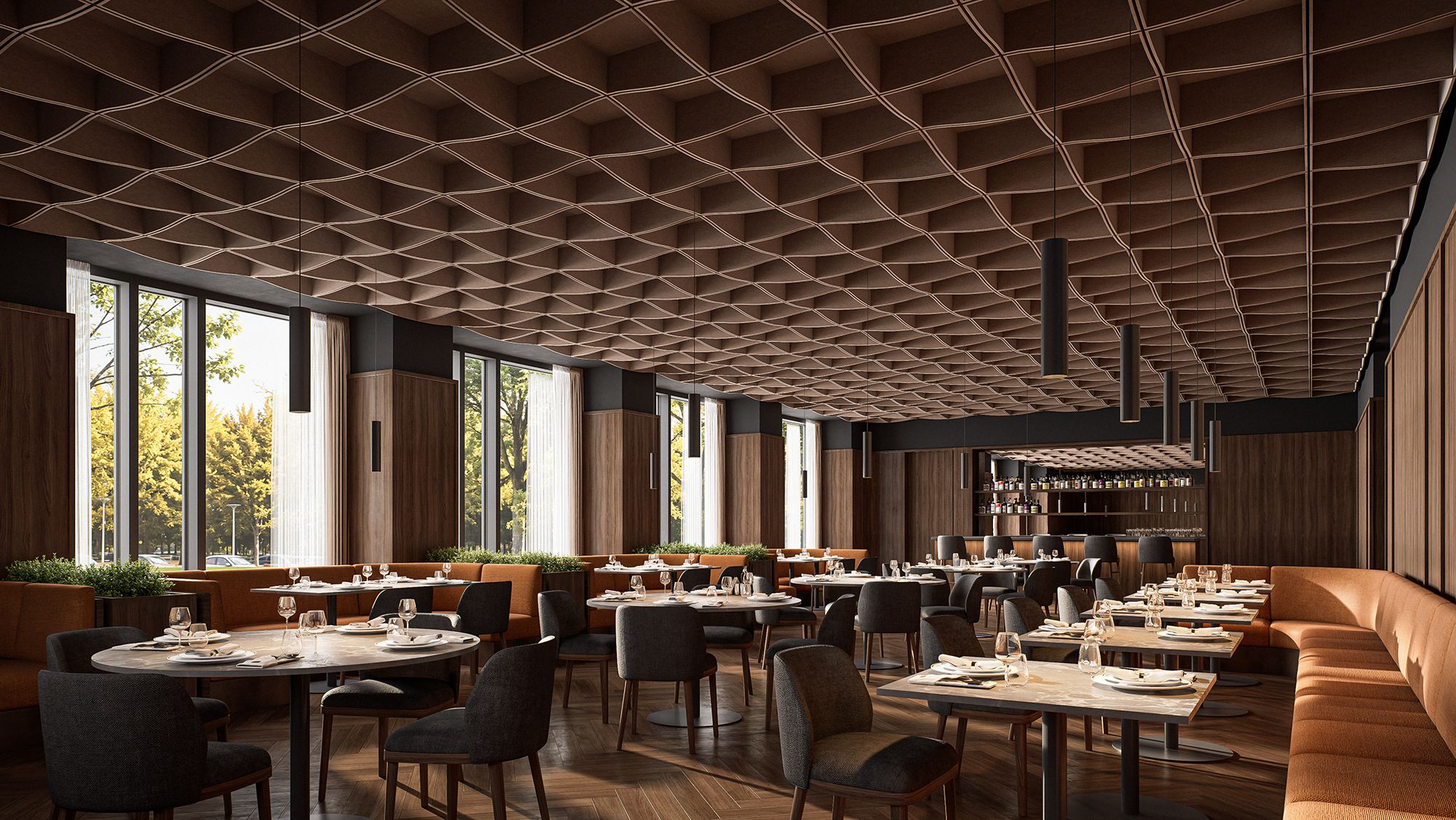
For commercial acoustic wall panels, this includes attachment methods, substrate conditions, panel alignment, and access for future maintenance. Acoustic ceiling systems introduce additional considerations, particularly when acoustic treatments must share space with lighting, sprinklers, HVAC diffusers, and other building components.
Ask manufacturers about mounting options, installation instructions, and coordination requirements before finalizing the design. Understanding these details early can help prevent conflicts, unnecessary modifications, and delays during construction.
Questions to Ask an Acoustic Panels Manufacturer
Before making a selection, use these questions to evaluate whether an acoustic material manufacturer can support your project:
- What acoustic materials and panel systems do you manufacture?
- What acoustic and fire testing is available for the proposed products?
- Can you provide specifications, environmental documentation, CAD/BIM files, and installation details?
- What dimensions, shapes, patterns, and finishes can be customized?
- Can you provide material samples or prototypes?
- Does your team assist with custom layouts and shop drawings?
- Can your systems accommodate lighting, HVAC, and other building elements?
- What are your typical lead times, and what technical support is available through installation?
The answers should provide a clearer picture of the manufacturer’s capabilities, responsiveness, and suitability for the project.
Choosing the Right Manufacturing Partner
Choosing an acoustic panels manufacturer comes down to finding a company that can support the project from initial specification through installation. The right partner understands the architectural intent, provides the information needed to make confident decisions, and has the manufacturing capabilities to deliver the finished design.
Material LogIQ combines a range of standard architectural acoustic products with custom design and fabrication capabilities, helping project teams develop solutions suited to their spaces.
Have an acoustic concept that doesn’t fit neatly into a standard panel system? Explore Material LogIQ’s Materialize process to see how our team can help develop it from initial concept through fabrication.