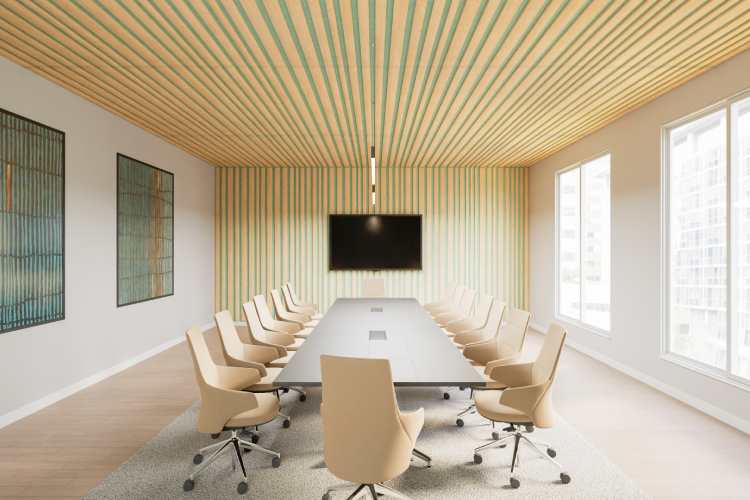
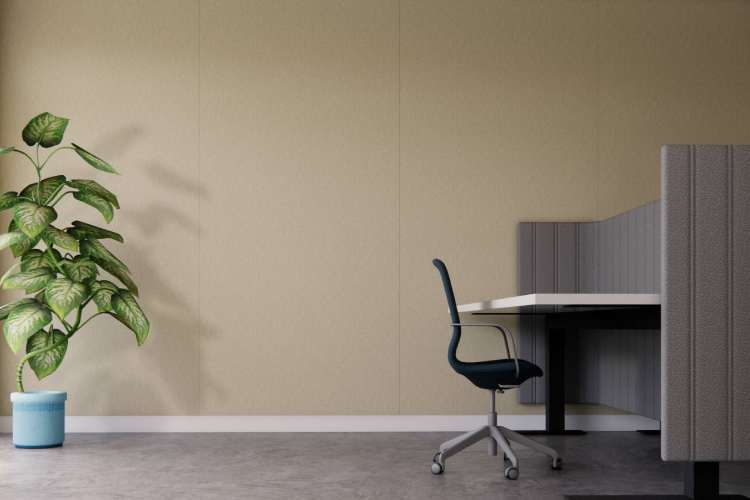
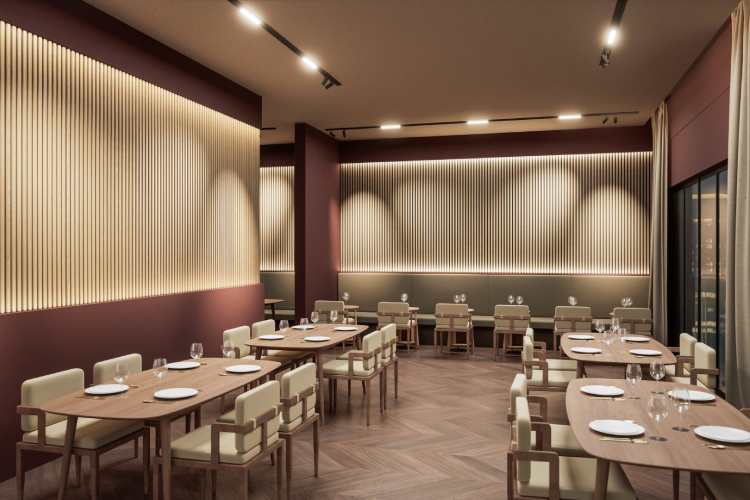
Elevate your spaces with PET felt acoustic solutions that seamlessly blend exceptional sound management with environmental responsibility. Crafted from 100% PET plastic containing at least 60% post-consumer content, each installation diverts hundreds of plastic bottles from landfills without compromising on performance or design flexibility. The material’s dense, fibrous structure effectively absorbs sound waves across a broad frequency spectrum, dramatically reducing reverberation in busy environments. Available in a rich palette of colors and textures, PET felt empowers architects and designers to create visually striking acoustic treatments while supporting sustainability goals through documented environmental credentials—turning yesterday’s beverages into today’s conversation-friendly environments, one bottle at a time.
PET felt delivers exceptional acoustic efficiency without heavy assemblies or complex construction.
Design Freedom
Extensive color ranges, CNC-cut patterns, and custom shapes support bold or subtle design expression.
Sustainability Built In
Made with up to 60% post-consumer recycled content and GREENGUARD Gold certified.
Easy Installation
Lightweight panels, predictable hardware, and clear documentation simplify coordination and reduce install time.
Full Technical Support
Samples, acoustic data, CAD/Revit assets, and detail drawings provided to support confident specifications.
FrequentlyAskedQuestions
What is PET felt?
PET felt is an acoustic material made from recycled plastic fibers that are heat-pressed into a dense, non-woven panel. The result is a lightweight, durable panel with excellent sound absorption properties and consistent performance across ceilings and walls.
How do PET felt panels absorb sound?
PET felt absorbs sound by allowing sound energy to enter the fibrous structure, where it is dissipated as heat. Increasing panel thickness, adding an air gap, or pairing the panel with an acoustic backer improves absorption—particularly at lower frequencies.
How thick are PET felt panels?
Common PET felt thicknesses range from 9 mm to 24 mm, depending on system type and performance requirements. Thicker panels and layered assemblies provide increased absorption. We can recommend an appropriate thickness based on your acoustic goals.
What acoustic performance can I expect (NRC)?
Acoustic performance varies by thickness, mounting method, air gap, and backing. PET felt panels are capable of achieving high NRC values with relatively shallow assemblies. Third-party lab data is available for specific configurations to support acoustic modeling.
How does PET felt compare acoustically to fiberglass panels?
PET felt achieves absorption through a dense, non-woven fiber structure, while fiberglass relies on loose mineral fibers behind a fabric wrap. In many applications, PET felt provides comparable mid-to-high frequency absorption with a cleaner, more durable surface and fewer handling concerns. Fiberglass panels may offer advantages in certain low-frequency applications when used in thicker assemblies.
Is PET felt fire-rated?
Yes. PET felt acoustic panels are available in Class A fire-rated assemblies per ASTM E84. Documentation is provided during the submittal process for AHJ review.
What colors are available?
PET felt is available in a wide range of solid colors, printed wood grains, and custom finish options. Color is integral to the material—not a surface coating—resulting in consistent appearance and excellent color durability.
Does PET felt shed fibers or create dust over time?
No. PET felt is a non-fibrous, non-friable material. Unlike fiberglass or fabric-wrapped panels, PET felt does not shed loose fibers or create airborne dust during normal use.
Are they sustainable?
Yes. PET felt panels are made with up to 60% post-consumer recycled content, are low-VOC, and are GREENGUARD Gold certified. They can support LEED and other green building initiatives.
Can installation integrate with lighting and HVAC?
Yes. Penetrations can be cut in the field to specification, as needed.
How do I clean them?
Vacuum with a soft brush attachment or dust lightly. For spots, use a slightly damp cloth and mild detergent. Avoid harsh solvents and abrasive tools.
What information do you need to quote my project?
Plans/elevations or RCPs, preferred panel format (tiles, clouds, baffles, wall panels), desired color/finish, target acoustics (if known), integration needs (lighting, sprinklers, Wi-Fi devices), and timeline.
What’s the lead time?
Lead times vary based on system type, quantity, color selection, and customization. Share your schedule and we’ll help align sampling, approvals, and production with your project milestones.