
Ceiling Panels
Elevate ceiling designs with acoustic panels engineered for direct attachment to various substrates like drywall or concrete. Offering superior sound absorption and cleaner, more monolithic ceiling planes, these acoustic ceiling panels let you achieve top-level acoustics without the drop associated with traditional grids. Available in diverse materials and finishes, they provide both aesthetic freedom and acoustic precision for your project.
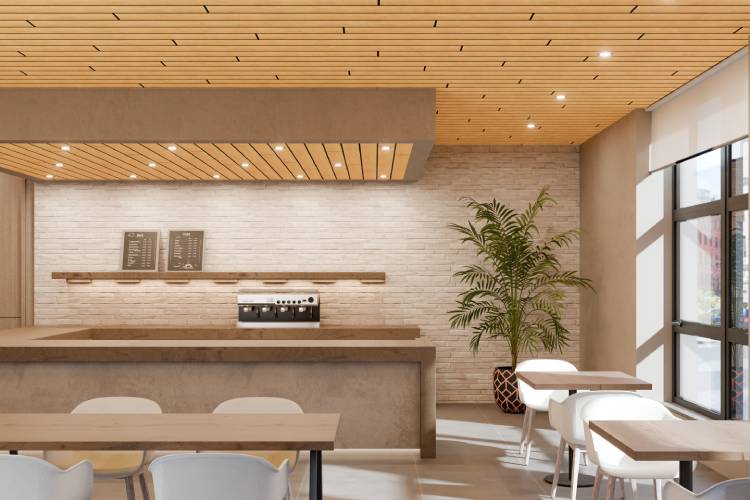
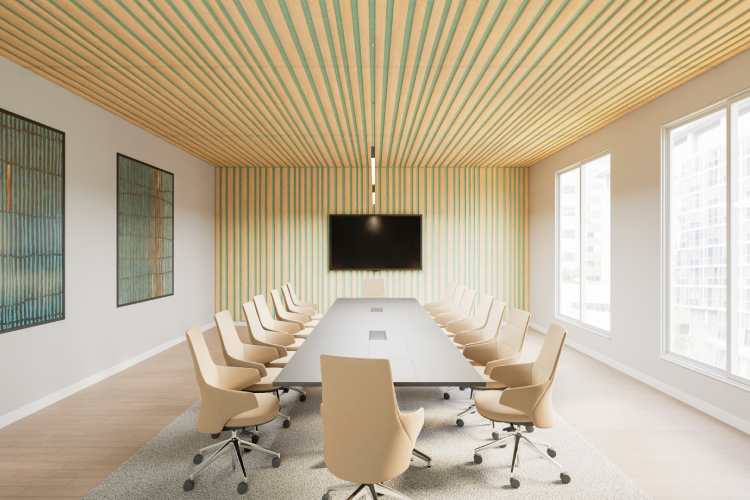


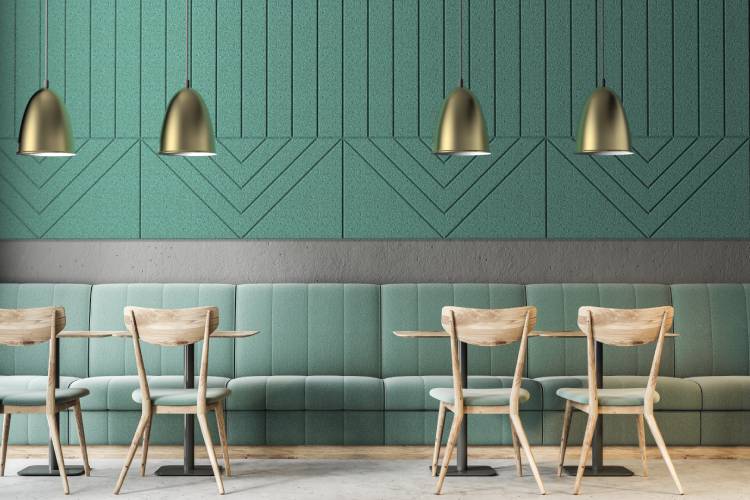

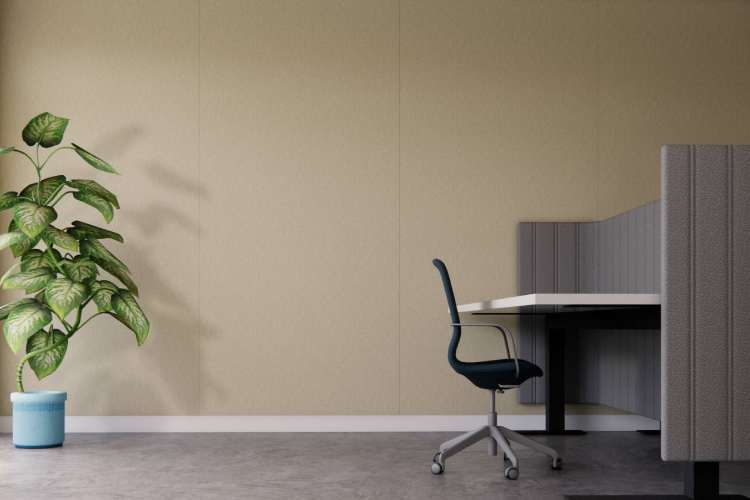
Choosing the Right Ceiling Panel System
Acoustic Target
Ceilings play a fundamentally different acoustic role than walls. Rather than addressing lateral reflections, ceiling panels primarily manage reverberation time, vertical flutter, and overall sound decay across a space. Material LogIQ ceiling systems can be tuned through panel thickness, air gaps, suspension height, and backing to meet RT60 targets, speech intelligibility goals, or music clarity requirements.
Ceiling Area, Height & Budget
Ceiling coverage is often larger than wall coverage and interacts directly with room volume and ceiling height. Higher ceilings may require thicker panels, suspended clouds, or baffles to effectively absorb sound within the occupied zone. Many projects use a hybrid ceiling strategy, combining high-NRC felt or metal panels for broad absorption with sculptural clouds, slats, or wood wool elements as visual features.
Design Integration
Ceiling panels are part of the visual field in a different way than walls. They must coordinate with lighting, HVAC diffusers, sprinklers, and structural elements. Finish selection—natural wood tones, bold PET felt colors, or micro-perforated metal—should support both acoustic performance and ceiling plane continuity. Well-designed ceiling systems elevate acoustics without visually cluttering the space.
Consider Your Environment
Ceiling durability requirements vary by sector. In education, healthcare, and public spaces, panels must withstand air movement, meet fire and hygiene standards, and allow access above ceiling systems. Corporate and creative offices often prioritize modularity, clean lines, and integration with open-ceiling aesthetics. Not all wall panel materials or mounting approaches are appropriate overhead; ceiling-specific engineering is critical.
Sustainability Requirements
Ceilings represent a large material surface area, making sustainability decisions especially impactful. Low-VOC materials, recycled content, and third-party certifications contribute meaningfully to occupant comfort and environmental performance. Selecting sustainable ceiling acoustics supports wellness goals while aligning with LEED and other green building frameworks.
Mounting or Hanging Methods
Suspension systems, seismic requirements, load calculations, and access to plenum spaces all factor into system selection. Material LogIQ provides technical support, shop drawings, CAD/Revit models, and layout assistance to ensure ceiling panels integrate cleanly with lighting, mechanical systems, and structural constraints.
Frequently Asked Questions
What materials are available for ceiling panel systems?
We offer multiple ceiling-appropriate acoustic systems, including:
- PET Felt (recycled)
- Wood slat panels
- Wood wool panels
- Micro-perforated aluminum systems
These materials including the backing are engineered for overhead installation and offer a wide range of finishes, textures, and performance levels. Not all wall panel constructions are suitable for ceilings; we guide material selection accordingly.
What acoustic performance can I expect from ceiling panels?
Performance varies by material, thickness, suspension method, and air gap above the panel.
For example, PET Felt ceiling panels can have an NRC rating of 0.40 when installed flat onto a wall, but achieve up to 1.35 when installed with an air gap for some products.
Micro-perforated aluminum ceiling systems (such as InvisiPerf) can achieve NRC values of 0.80 without backer, and higher with backer.
Ceiling acoustics are most effective when material selection, mounting height, and room volume are considered together.
Are the ceiling panels fire-rated and suitable for commercial interiors?
Yes. Many of our ceiling systems are Class A fire-rated per ASTM E84 and are designed for commercial environments. Always review the specific product’s technical datasheet to confirm fire performance, smoke development, and code compliance for your application.
Can I get custom sizes, finishes or colors?
Yes. Many ceiling panel systems support custom sizes, shapes, finishes, and colors. Customization is especially common for ceiling clouds, baffles, and feature ceilings. Early coordination is recommended to align aesthetics, budget, and performance.
How are ceiling panels installed, and what should I plan for?
Ceiling installation methods differ significantly from wall systems. Options include direct attachment, suspension cables, rail systems, or engineered frames.
Key considerations include ceiling height, plenum depth, access requirements above the panels, seismic or code constraints, and coordination with lighting, HVAC, and sprinklers. Wall mounting logic does not directly translate overhead, so ceiling-specific detailing is essential.
What maintenance is required for ceiling panels?
Maintenance depends on material selection:
- PET Felt ceiling panels: Keep free of dust; vacuum gently if needed.
- Wood or wood wool panels: Clean with a soft cloth; avoid excessive moisture.
- Metal/aluminum ceiling panels: Wipe with a soft cloth and mild detergent; avoid scratching or abrasive cleaners.
Always follow the product-specific maintenance guidance provided with your specification.
Are these panels sustainable / eco-friendly?
Yes — sustainability is a strong part of our product design.
For instance, PET Felt Panels incorporate 60% post-consumer recycled content and are GREENGUARD Gold certified. We design systems with low-VOC emissions and deliver documentation for LEED, HPD or Declare declarations where applicable.
We can assist with sustainability documentation for your project.
What is the lead time?
Lead times vary based on material type, customization, finish selection, and project scale.
When contacting us, please share ceiling areas, ceiling heights, acoustic targets, finish preferences, budget range, and installation timeline. This allows us to recommend systems that balance performance, aesthetics, and schedule.
Can I see samples, and how should ceiling panels be specified?
Yes. Physical samples are available and strongly recommended for ceiling applications, as lighting conditions and viewing angles differ from walls. In your specification, reference the exact ceiling system name (e.g., “PET Felt Ceiling Cloud – [model name]” or “InvisiPerf Metal Ceiling Panel – [model]”), along with size, thickness, finish, acoustic rating, and mounting method.
We provide specification sheets, details, and DWG/Revit families to support accurate documentation.